
Cameras, NVR recording, smart locks, and alarm integration — designed as one system with the rest of your smart home. No separate apps. No stranger in a call center. No subscription trap.












The security industry has trained people to expect three things that shouldn't be true: an app that doesn't talk to anything else, a monthly cloud subscription for footage you already own, and a call-center monitor who doesn't know your address.
We build security into the smart home. Cameras live on their own VLAN on your network. Footage records locally to an NVR you own. Arming states tie into lighting, shades, and voice — "I'm leaving" turns on the alarm, closes the shades, and sets the thermostat back, all in one press.
If you want cloud recording, we set it up. If you want pro monitoring, we set that up. But the base system is one you own, at your house, talking to everything else in it.
This is the first design step we walk every client through — what the camera sees, and what it doesn't. Drag any camera to test angles. Click the plan to add one. Click a camera to remove it.
Real coverage design factors FOV, mounting height, wall occlusion, and purpose — face capture, license plate, or wide-area. This is the simplified view.
4K and 8MP fixed, dome, PTZ, thermal, and doorbell — specified to the use case. Low-light and IR standard.
Network video recorder sized to your retention window — typically 2 – 4 weeks. Cloud backup optional for off-site redundancy.
Door / window sensors, glass-break, motion, smoke, water. Self-monitored or UL-certified pro-monitored — your call.
Yale, Schlage, August — integrated with access codes, schedules, and smart-home triggers. Lock-all on "Good night."
We're brand-agnostic. The platform gets picked for the job — not for the rebate. Most Montgomery County projects land on Alarm.com panels with Axis or Ubiquiti cameras, but every brand in the strip has a place depending on scale and budget.
Every check adds to the estimated monthly pro-monitoring cost on the right. This is a teaching tool — the real scope comes out of the walkthrough.
Hardware priced separately. Monthly passes through to the monitoring company — we don't mark it up.
We design for signal, not fear. Cameras people buy and never look at are decoration. Coverage you can rely on — tied to lights, locks, and the rest of the house — is the one that actually does something when a sensor trips.— Rick · SWAT A/V · North Potomac, MD
Stand-alone security apps are dead weight. We tie security into the same Savant, Josh.ai, or Apple Home interface running the rest of the house.
Arms the alarm, locks every door, turns off interior lights, closes the shades, and sets thermostats back — one tap.
The nearest touchscreen shows who's there. The driveway camera pulls up live at the same time.
Interior lights come up, exterior floodlights trigger, and camera footage bookmarks the event for review.
From the app or by voice: "Josh, arm the house." Same command inside, outside, or on the road.
We walk the property inside and out — identifying natural entry points, line-of-sight weaknesses, and blind spots. We ask what you're actually protecting.
Every camera positioned for a purpose — plate capture at the driveway, face capture at the door, wide-area on the yard, interior on entry points.
Cameras on an isolated VLAN, cabled on PoE switches, recording to a local NVR. Storage sized to the retention window you want.
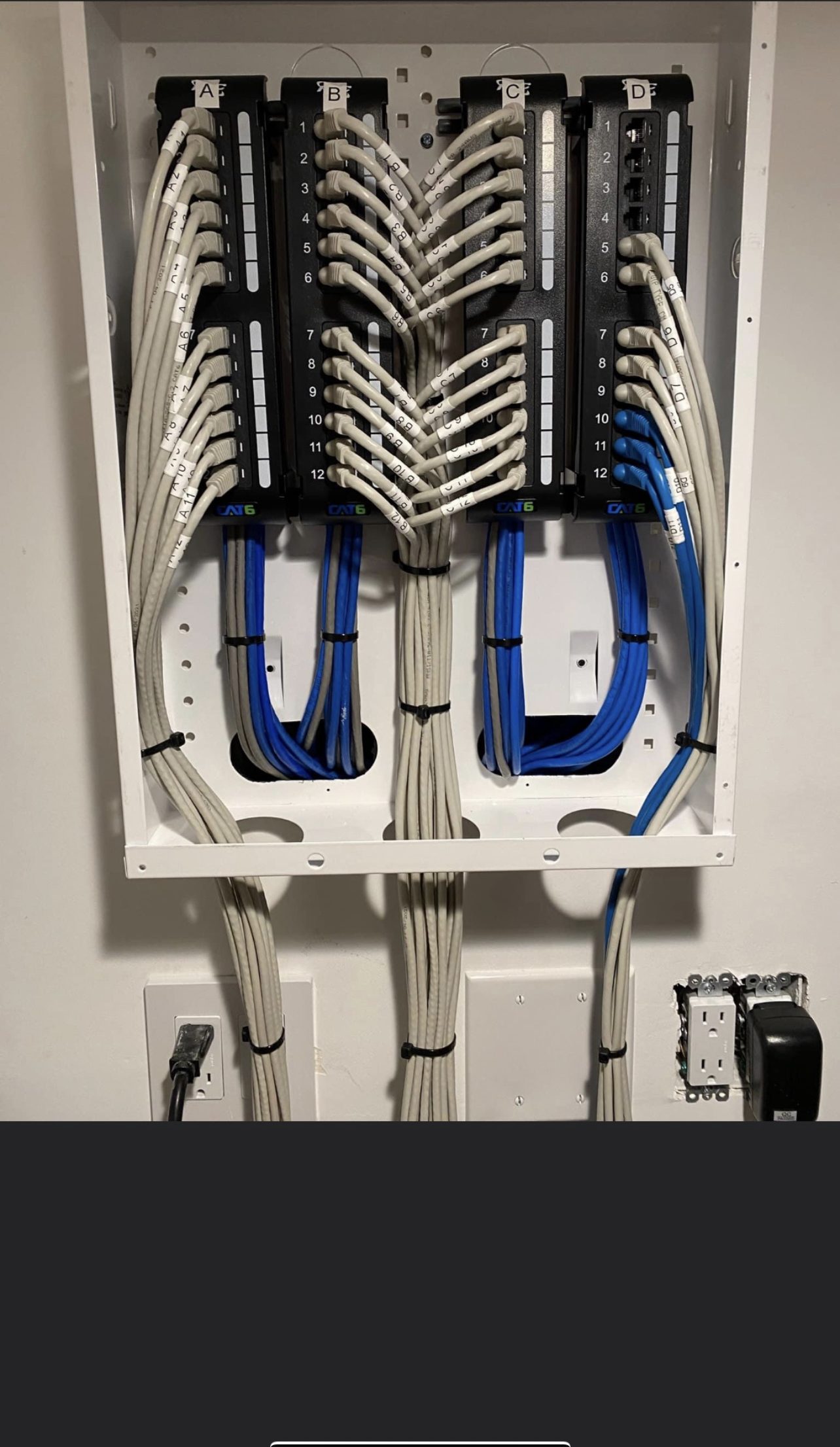
Cat6 pulled cleanly. Cameras mounted flush, not dangling. Conduit where appropriate. No exposed cable on exterior walls.
Motion zones, analytics, and notifications tuned to kill false positives. Arming states tied into scenes — "good night," "away," "vacation."
Every family member shown how to pull footage, review alerts, arm / disarm, and use the app. Pro-monitoring enrolled if requested.
Every scope is custom — these are the three tiers nine of ten security projects land in.
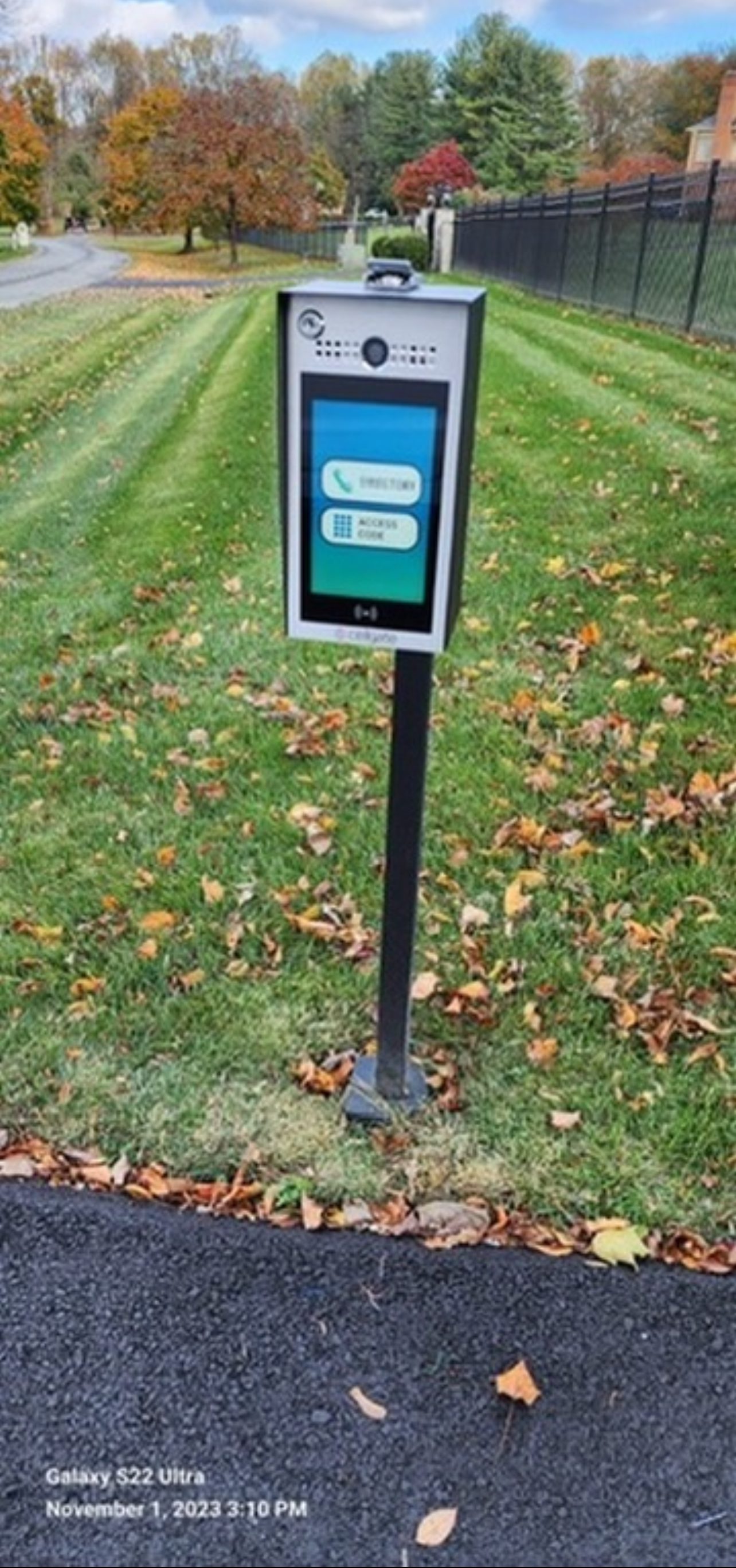
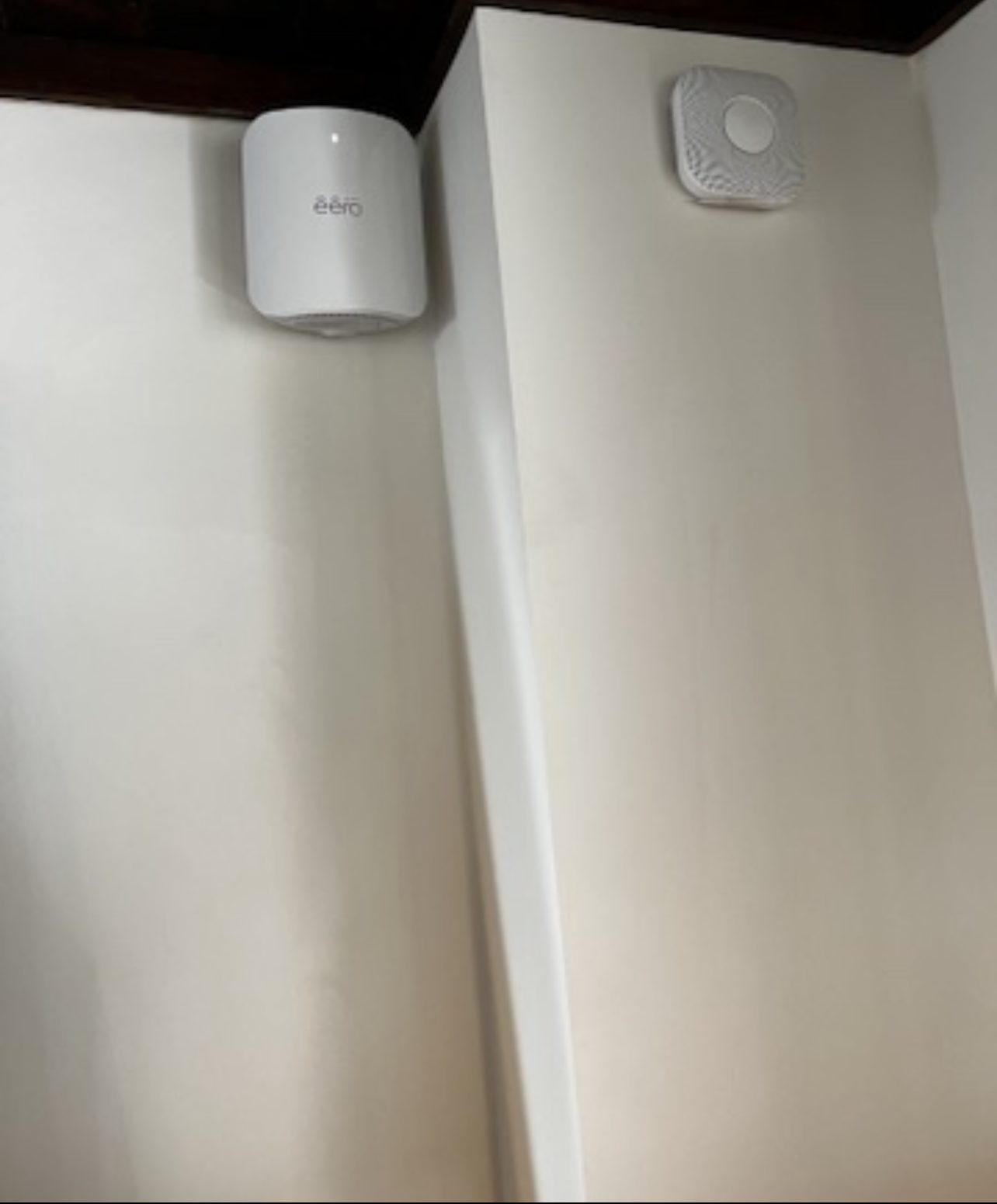
Photos from real projects across Potomac, Bethesda, and the DMV. No renders, no stock — every frame is a finished install.
Self-monitoring — alerts hit your phone, you decide whether to call the police — works for many clients and costs nothing monthly. Professional UL-certified monitoring is the right answer if you travel often, have elderly family members, or want video-verified dispatch with faster police response. We set up either, and we don't mark up the monthly fee.
4K / 8MP is default on every new install. The reason isn't sharpness — it's digital zoom. A 4K camera lets you crop into a 1080p usable region after the fact, which is the difference between "someone wearing a hoodie" and a face. For driveway and license-plate cameras, we spec varifocal 4K with low-light sensors.
Depends on storage size and camera count. A typical residential NVR holds 2 – 4 weeks of continuous 4K across 8 cameras. Motion-only recording extends that significantly. For estates we spec redundant NVRs with 30-day retention. Cloud backup on key cameras is an optional layer for off-site redundancy.
Two ways. First, analytics — modern cameras and sensors distinguish people and vehicles from animals, leaves, and headlights, which cuts alerts by 90%+. Second, video verification — the monitoring station sees the clip before dispatching police, which prevents fines and faster-tracks real events. We tune motion zones and sensitivity during handoff.
Deeply. Arming states trigger lighting scenes (dim, path lights), shades (close at night), and HVAC (setback on "away"). Doorbell rings show on Savant or Josh.ai touchscreens. Camera feeds pipe to any display in the house on request. It's one experience — not a security app plus a lighting app plus a thermostat app.
Three possible layers, all optional — and all passthrough to the provider (we don't mark them up). Pro monitoring is billed by the monitoring company. Cellular alarm backup is a small carrier fee. Cloud backup on select cameras is optional per-camera storage. OVRC remote support from us is included — no subscription. We'll walk you through exactly what's worth it for your setup during the quote.
Every security install starts with a walk. We come to you, identify coverage needs, and scope a system you'll actually use.