
Sonos, architectural in-ceiling, and premium distributed audio — designed for how music actually moves through a home. One app, every room, zero compromises.













Whole-house audio gets sold two ways. The shortcut: plug a few portable speakers into outlets, call it a system. The real version: architectural speakers hidden in the ceiling of every room you use, tuned to the room's shape, controlled from one app, consistent from the kitchen to the primary bedroom to the patio.
Sonos is excellent for what it is — and we install it constantly. But a Sonos One on a bookshelf isn't enough for a 500-sqft family room. We pair the platform with speakers sized to the room.
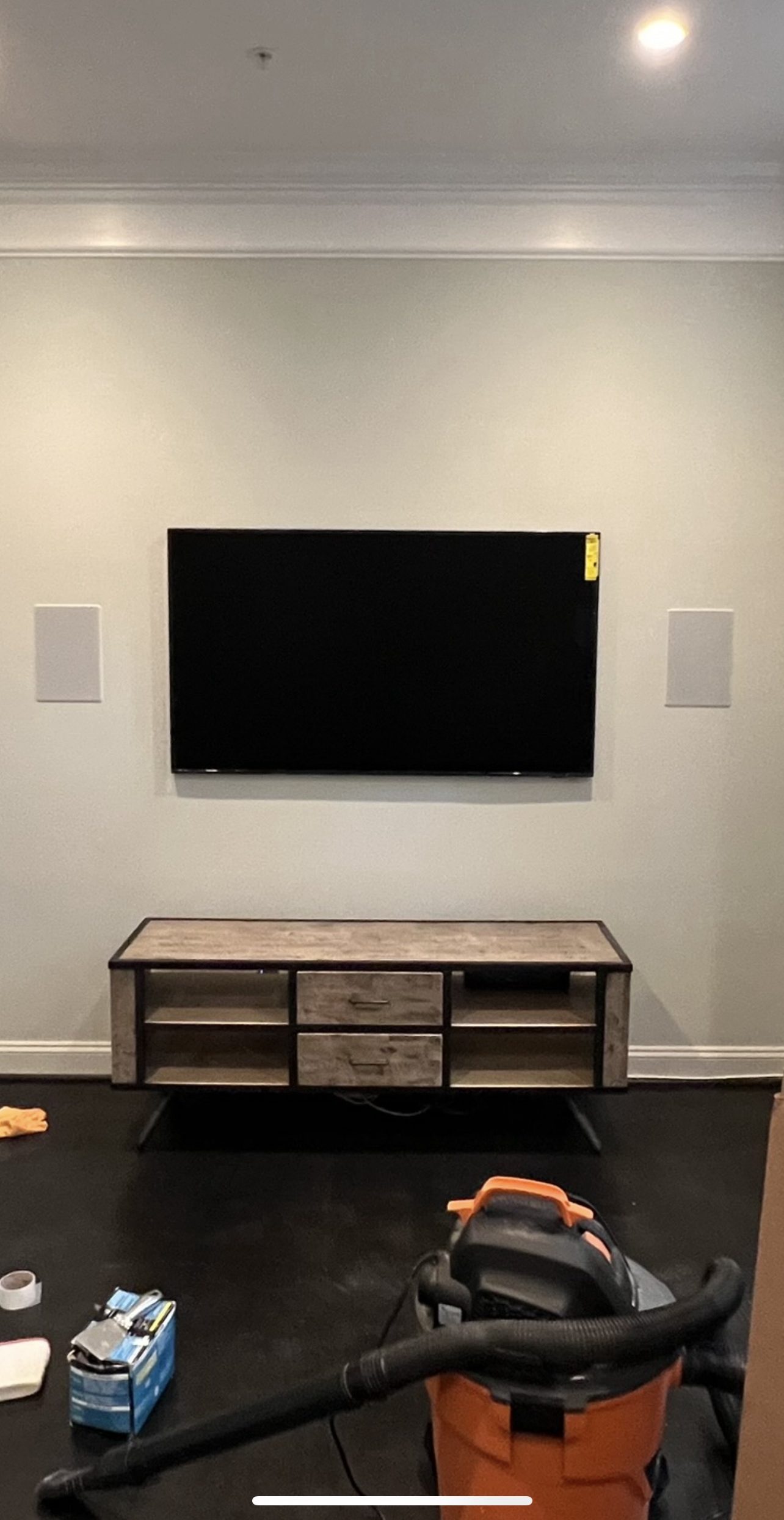
Architectural in-ceiling speakers, flush-mount grilles, paint-matched. Guests look up and notice the ceiling has no seams. That's the goal.
Kitchen playlist in the kitchen. Dinner playlist in the dining room. Same library, separate zones, group on command. No walking between rooms with a phone.
Sonos runs on WiFi. Weak network, dropped music. We fix the root cause — not the symptom. Usually it's the real reason your system has been annoying for years.
A real distributed-audio system lets you route any source to any zone in seconds. Click to activate. Pick a source. Group zones. That's how it actually works, every day.
The right speaker depends on the ceiling, the wall, the room's use — and whether you want to see it or not. Pick a form factor.
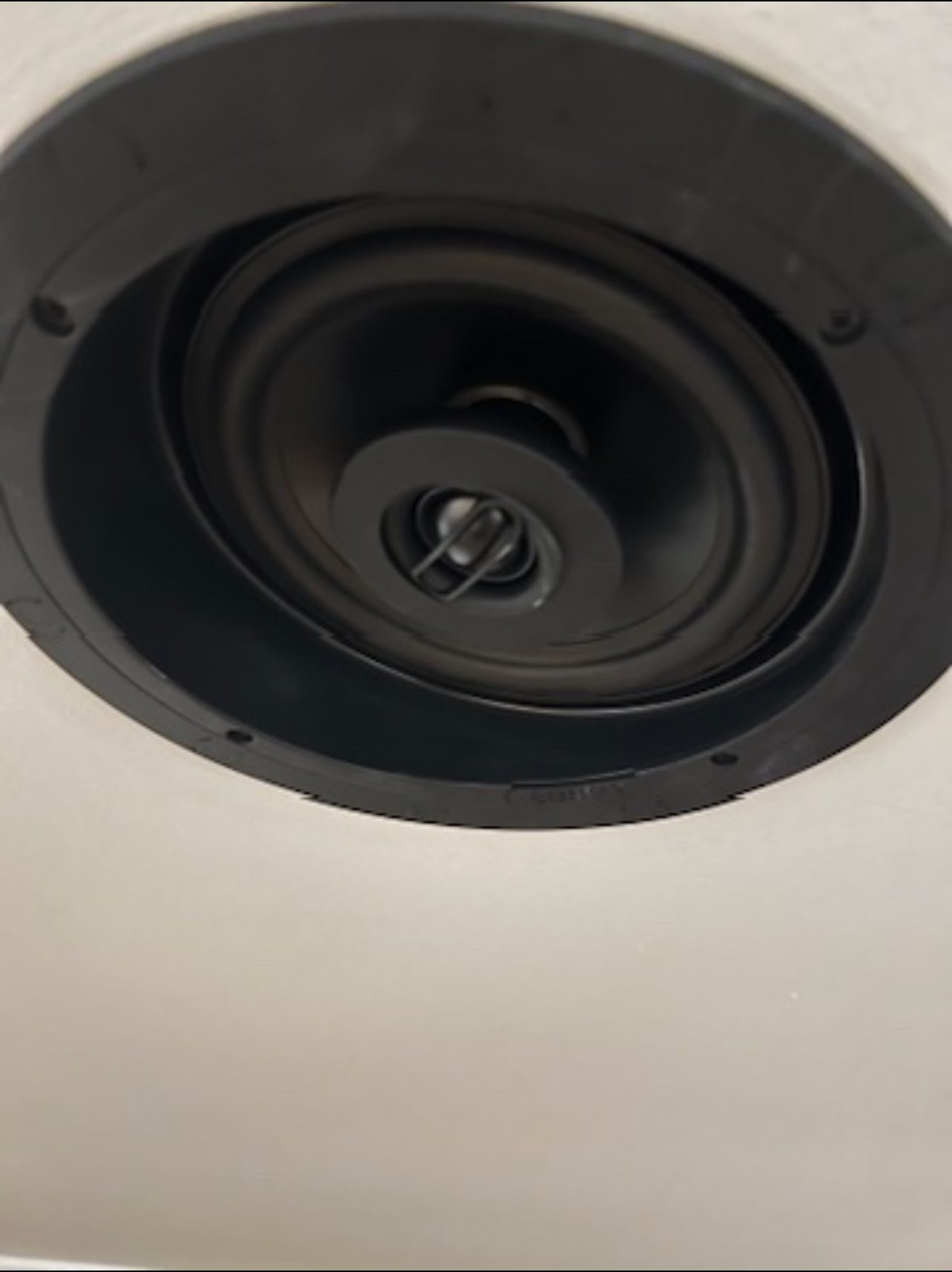
Round 6.5" or 8" driver recessed flush with the ceiling. Paintable grille disappears into drywall. The right answer for kitchens, bedrooms, hallways, and most living spaces.
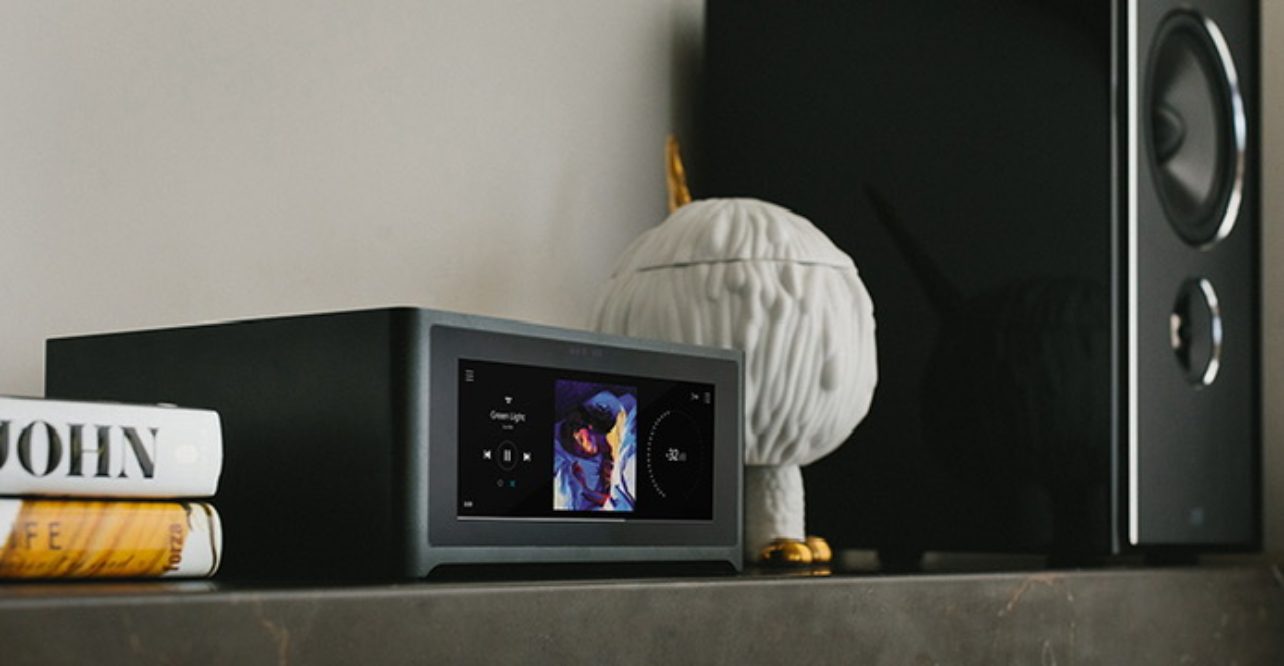
Three streaming platforms cover 95% of what we install: Sonos for the mainstream, Bluesound for the audiophile, and Denon Heos for households built around Denon or Marantz electronics. Most homes get a hybrid — Sonos doing the daily-driver rooms, a Bluesound zone or dedicated two-channel room for the person in the family who can hear the difference.
Before you pick a platform, understand what's actually moving through the air. The choice between Sonos, Bluesound, or anything else only matters once you know whether your music is being squeezed through a straw or pouring through a fire hose.
Bluetooth is a phone-to-speaker pipe. Your phone holds the file, compresses it on the way out, and beams it to one speaker at a time over a short-range radio link — usually under 30 feet, line-of-sight matters, walls hurt. To make the signal fit, Bluetooth throws away data. Even the "good" codecs (AAC, aptX, LDAC) discard somewhere between 5× and 10× the original detail. You don't notice on a portable speaker by the pool. You absolutely notice in a quiet living room with $4,000 worth of in-ceiling speakers above your head.
Bluetooth has another problem: it leaves the phone. When the phone rings, the music ducks. When you take the phone to another room, the music drops. When the battery dies, the party ends.
WiFi audio is the opposite. Your phone tells the speakers what to play, but the speakers go fetch the music directly from the source — Spotify, Apple Music, Tidal, your own library — over your home network. The phone is the remote, not the messenger. Lose your phone in the couch cushions and the music keeps playing. Walk to the kitchen and the kitchen speakers join the same song in perfect sync. The signal isn't compressed for transit, so the file your service is streaming is what your speaker actually plays.
If you want music to feel like part of the house — multiple rooms in sync, no battery, no dropouts, no ducking when a text comes in — you want WiFi. Bluetooth is for portable speakers. WiFi is for homes.
Sonos is on this list because they earned it. The app works. The integrations are real. You can hand a Sonos system to an in-law and they'll figure out how to play their favorite playlist in the kitchen in under 30 seconds. Every streaming service worth caring about is supported. AirPlay 2 and Spotify Connect work natively. We install Sonos constantly — it's the right answer for the vast majority of homes, the vast majority of the time.
Where Sonos draws the line: audio quality. Sonos streams up to CD-quality (16-bit, 44.1 kHz) — which is what 95% of the music coming out of Spotify, Apple Music, and Amazon HD is anyway. So for most ears, in most rooms, with most music, Sonos sounds exactly as good as the source allows.
Bluesound is built by the same engineering team behind NAD Electronics — a 50-year-old audiophile brand. The platform supports up to 24-bit / 192 kHz hi-res files, MQA, FLAC, and integrates with Roon — the dedicated audiophile streaming app that costs $150/year and treats your music library like a library, not a playlist.
Bluesound zones cost roughly 2× what equivalent Sonos zones cost. The hardware is heavier. The amplifiers are better. The DACs (the chip that turns digital files into the analog signal your speakers actually play) are several tiers up from what's inside a Sonos amp. If you have a real two-channel listening room — meaning a couch positioned at the apex of a triangle pointed at two floor-standing speakers, played at a respectful volume, with the lights low — Bluesound will deliver a noticeably better experience than Sonos can.
Forget the audiophile-or-not debate. The right way to choose is by what the room is for:
Bluetooth was built for portable speakers — pool, patio, picnic, hotel room. It compresses the signal hard and depends on a phone staying nearby. That's fine for a portable speaker. It's a poor foundation for a house. A whole-home system shouldn't depend on whose phone is in the room or whether someone took a call. The house should hold the music — that's the whole point of WiFi audio, and the reason platforms like Sonos and Bluesound exist.
Music where you need it. Invisible where you don't. Done right, people tell us they use those rooms more afterwards — the house just feels more alive.— Rick · SWAT A/V · North Potomac, MD
From the room, you see a paintable grille. Above the grille — drywall cut-in, bracket tabs, back-box, and the speaker itself sealed into the joist cavity. Done right, you don't see it.
Which rooms are "always music"? Which are occasional? Which need deeper bass — family room, primary bedroom? We walk through with you before specifying a thing.
Sonos for unified control and ease. Bluesound for hi-res streaming. Dedicated two-channel for the audiophile room. Often all three, coexisting cleanly.
Speakers placed for stereo imaging at seated positions — not just symmetry in the drywall. For long rectangular rooms, often two pairs, not one centered pair.
Amps rack-mounted in the AV closet, ventilated, with structured cable management. Every speaker run labeled. Zone amps sized to the speaker load.
14/4 or 16/2 speaker wire pulled cleanly. Clean in-ceiling cut-outs, flush grilles, painted to match. No ragged drywall edges, ever.
Every zone volume-calibrated for balanced perceived loudness. Phone apps configured per family member. Scene integration with lighting and shades.
Every distributed-audio project is scoped room-by-room, but most land in one of three tiers. Here's where the conversation usually starts.
Photos from real projects across Potomac, Bethesda, and the DMV. No renders, no stock — every frame is a finished install.
Depends on the home. Sonos is excellent for retrofits where you can't pull wire, and the ease-of-use is unmatched. Hardwired architectural systems sound better per dollar and don't care about your WiFi. Most of our installs are hybrid — Sonos front-end, hardwired ceiling speakers. Best of both.
Start with the rooms you'd miss if they were silent. For most families that's 6–8: kitchen, primary, living, office, dining, basement, patio. We don't recommend wiring rooms nobody uses — zones you never turn on aren't savings, they're waste.
Driver size, back-box sealing, and tweeter quality — in that order. A 6.5" driver with a sealed back-box in an insulated ceiling sounds better than an 8" driver in an open cavity. We spec by room size and acoustic, not by marketing.
Yes — and you should. Outdoor patio speakers become one more zone in the same app. Start an evening playlist inside, walk out, keep listening. See our Outdoor A/V page for weatherproofing details.
We quote fixed-price per zone once we've walked the home. Speaker tier, zone count, and whether in-ceiling retrofits need drywall patching are the main drivers. No change orders, no surprises.
Often yes. If the previous install used 16-gauge or better and the runs land in a central closet, we can reuse. If it's 18-gauge, split across rooms, or terminated in random outlets — we repull. We test every run before we commit.
Every audio project begins with a walkthrough — which rooms matter, which never will, what gets used at dinner, what gets used at 6 a.m. coffee. We come to you.