
Experienced Lutron installation for lighting, dimming, and motorized shades. One system for every switch in the house — tuned to the way your family actually moves through the day.











A regular light switch turns one fixture on or off. A Lutron system turns a whole house into a single, tunable environment — dimmed at sunset, dark at bedtime, guest-friendly at a dinner party, bright-and-task-ready in the kitchen at 7 a.m.
Lutron is the gold standard in residential lighting control. We've been installing it since before most integrators in this region touched their first dimmer. And because Lutron works best when it's designed — not bolted on — we treat every project as a lighting plan, not a shopping list.
This is a working model of how a Lutron keypad actually drives a room — dimming, color temperature, and shade position in sync. Pick a scene or set it manually.
Lutron makes three residential platforms we install. Picking the right one matters more than people realize. Pick too small and you outgrow it. Pick too big and you overpay for features you'll never use.
We'll walk you through the right answer for your square footage, your fixture count, and how you want to control it. No commission-based upsells — if Caseta is the right answer, Caseta is what we install.
Lighting is the one thing in a house that you touch fifty times a day. Most people never think about it — until someone shows them what it could be. Then they never want to go back.— Rick · SWAT A/V · North Potomac, MD
Lutron motorized shades are the most common "I wish I'd done this sooner" upgrade we install. Integrated with the rest of your smart home, they do four jobs.
Shades drop automatically at peak sun to protect hardwood, fabrics, and artwork from UV damage.
Closed shades at midday cut HVAC load. Paired with a smart thermostat, one of the best ROI combos in the category.
Bedroom, bathroom, and primary-suite shades on schedules. No one forgets at night.
Blackout shades for theater rooms and primary bedrooms, tied directly to "movie" and "goodnight" scenes.
We install Sivoia QS Triathlon (wireless), Sivoia QS (wired for new construction), Palladiom (architectural), and Roller / Cellular / Roman fabric options through Lutron's fabric program.
A keypad replaces three-to-ten traditional switches with one engraved, backlit panel. Programmed scenes — "Good Night," "Entertain," "Movie," "Morning" — control dozens of lights, shades, and integrated devices with one press.
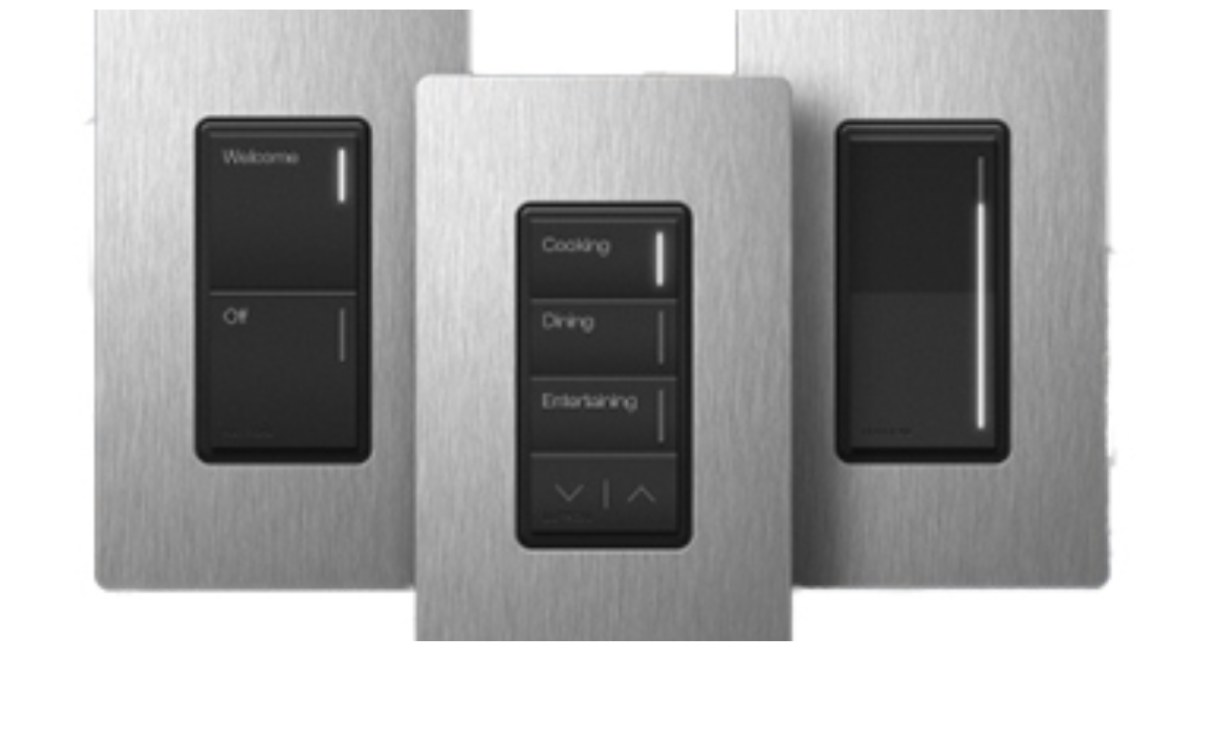
Morning — kitchen and primary bath at 70%, 4000K cool white. Dining pendants off. Shades up.
Entertain — pendants and sconces at 65%, 2700K warm. Accent lighting on art. Music starts.
Movie — all overheads off, path lights at 8%, theater at cinema black. Shades close. AVR powers on.
Good Night — every interior fixture off, exterior path lights on low, shades down, alarm arms.
Every scene we program is tuned by walking the house after dark. Theoretical scenes never feel right. Walked scenes do.
A rough guide for a 4,000-square-foot home with a RadioRA3 system. We tune the count to your plans and your life.
| Room | Recommended Scenes | Keypads | Shade Type |
|---|---|---|---|
| Living | Day · Entertain · Movie · Goodnight | 1 · 5-button | Sivoia QS Roller (light-filter) |
| Kitchen | Morning · Cook · Dinner · Cleanup | 2 · 4-button | None — sun handled by overhang |
| Primary Bedroom | Wake · Read · Goodnight · Vacation | 2 · 5-button (bed + bath) | Sivoia QS Triathlon (blackout) |
| Dining | Dinner · Entertain · Clean | 1 · 3-button | Roman (fabric) |
| Hall / Stairs | Path · Off · Vacation | 2 · 2-button | — |
| Exterior | Evening · Late · Off · All On | 1 · 4-button at entry | — |
We walk every room at the time of day you actually use it. Photograph fixtures, catalog switches, flag dead outlets and undersized boxes.
Dimmer compatibility matters. Some LED fixtures hum, flicker, or won't dim at all on the wrong gear. We verify loads and spec dimmers that match.
Caseta, RA2 Select, or RadioRA3. Keypads, dimmers, switches, shades. Color temperature. Finish and engraving.
Pulled permits where required. Cleanly swapped at every opening. Zero-footprint retrofits into existing walls; pre-wire for new construction.
Scenes programmed, tested, and walked at the real time of day. Astronomic clocks calibrated to your latitude. Shade schedules built around sun path.
Every family member trained on the keypads they'll use. Printed scene legends left on site. App configured on every phone.
Lutron is the cleanest integration target in the smart-home industry. If you're on a path toward full automation, this is almost always step one.
Every project is custom-scoped, but these are the three tiers most of our Lutron clients fall into. All are fixed-price before install.
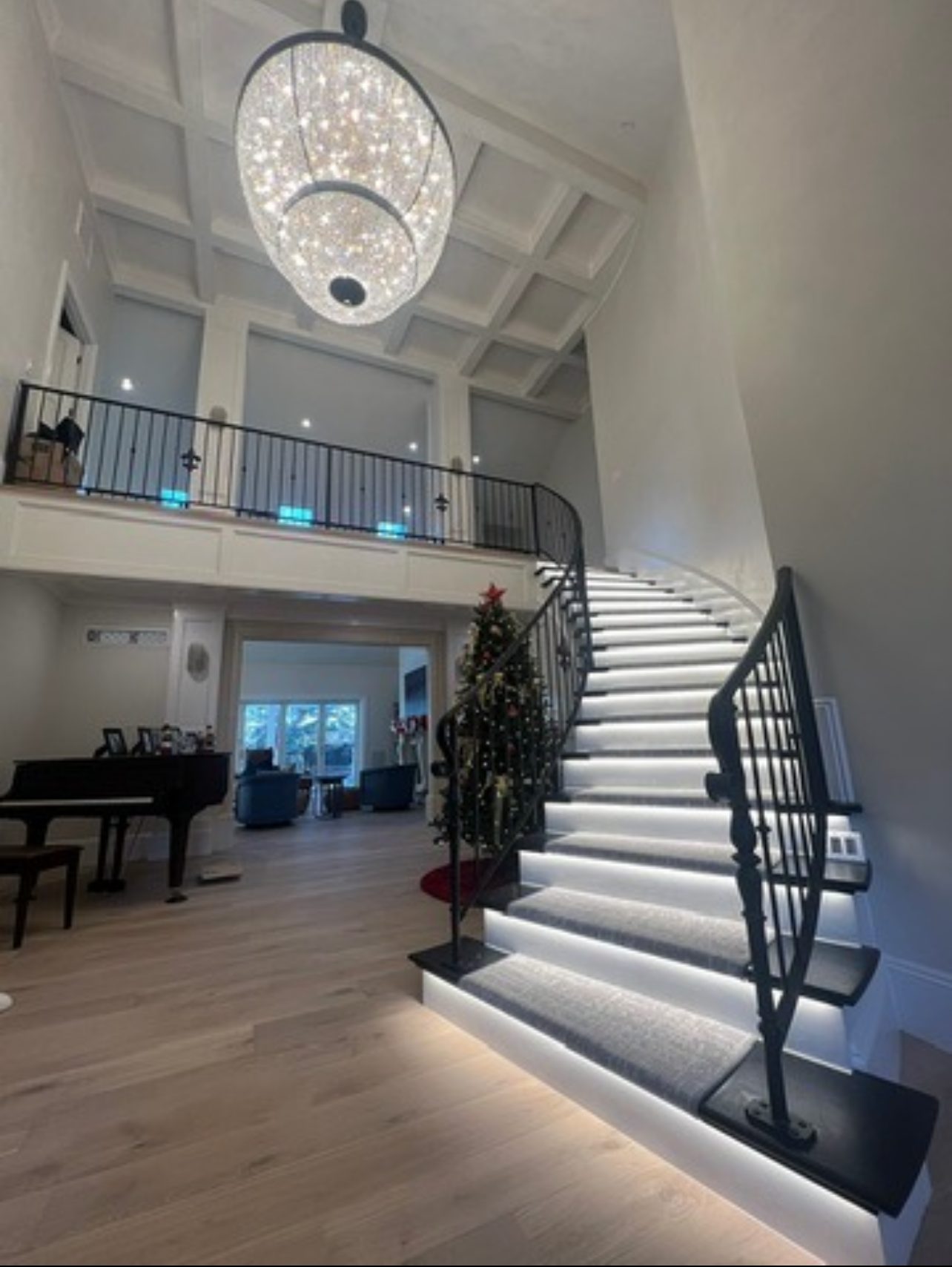
Photos from real projects across Potomac, Bethesda, and the DMV. No renders, no stock — every frame is a finished install.
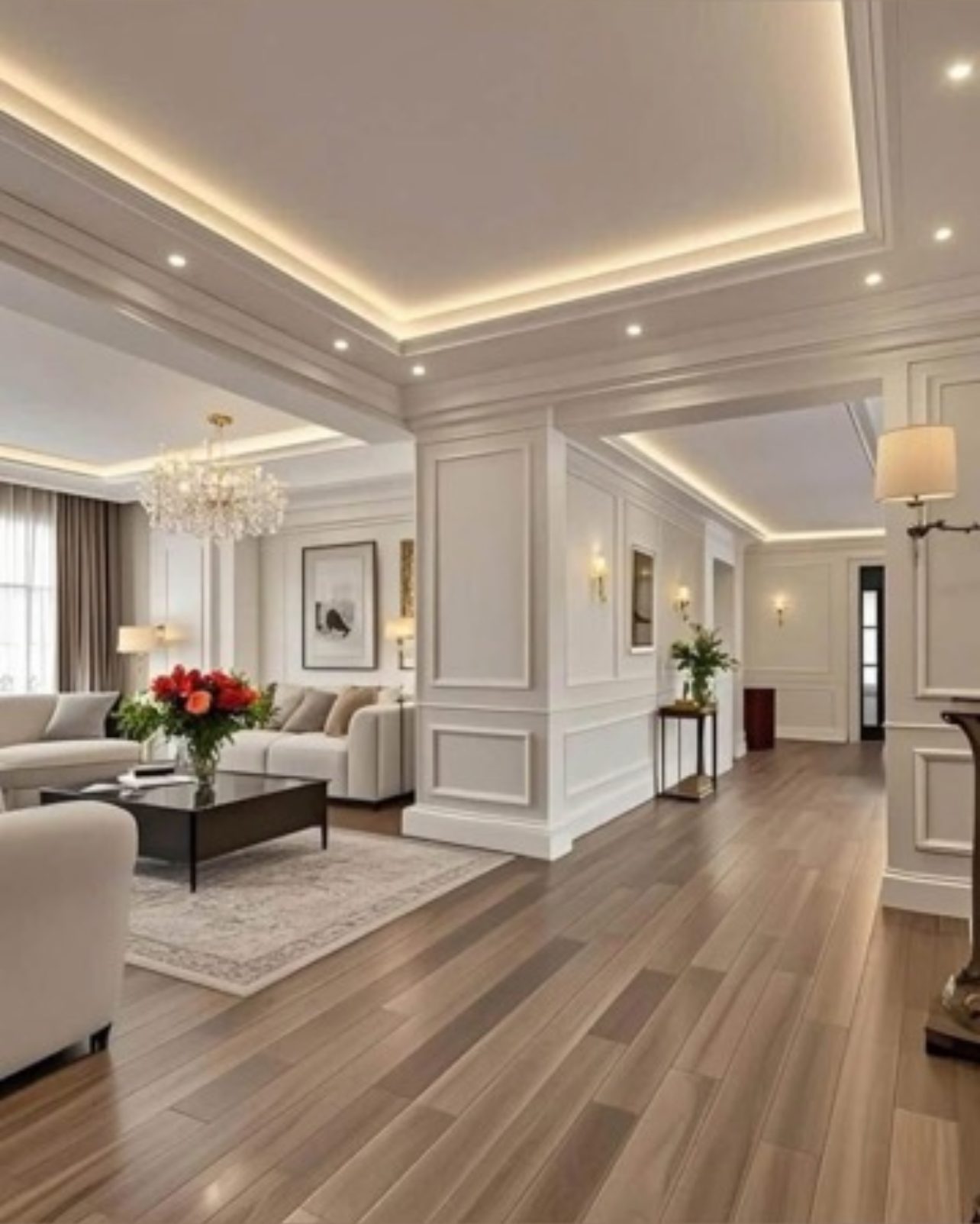
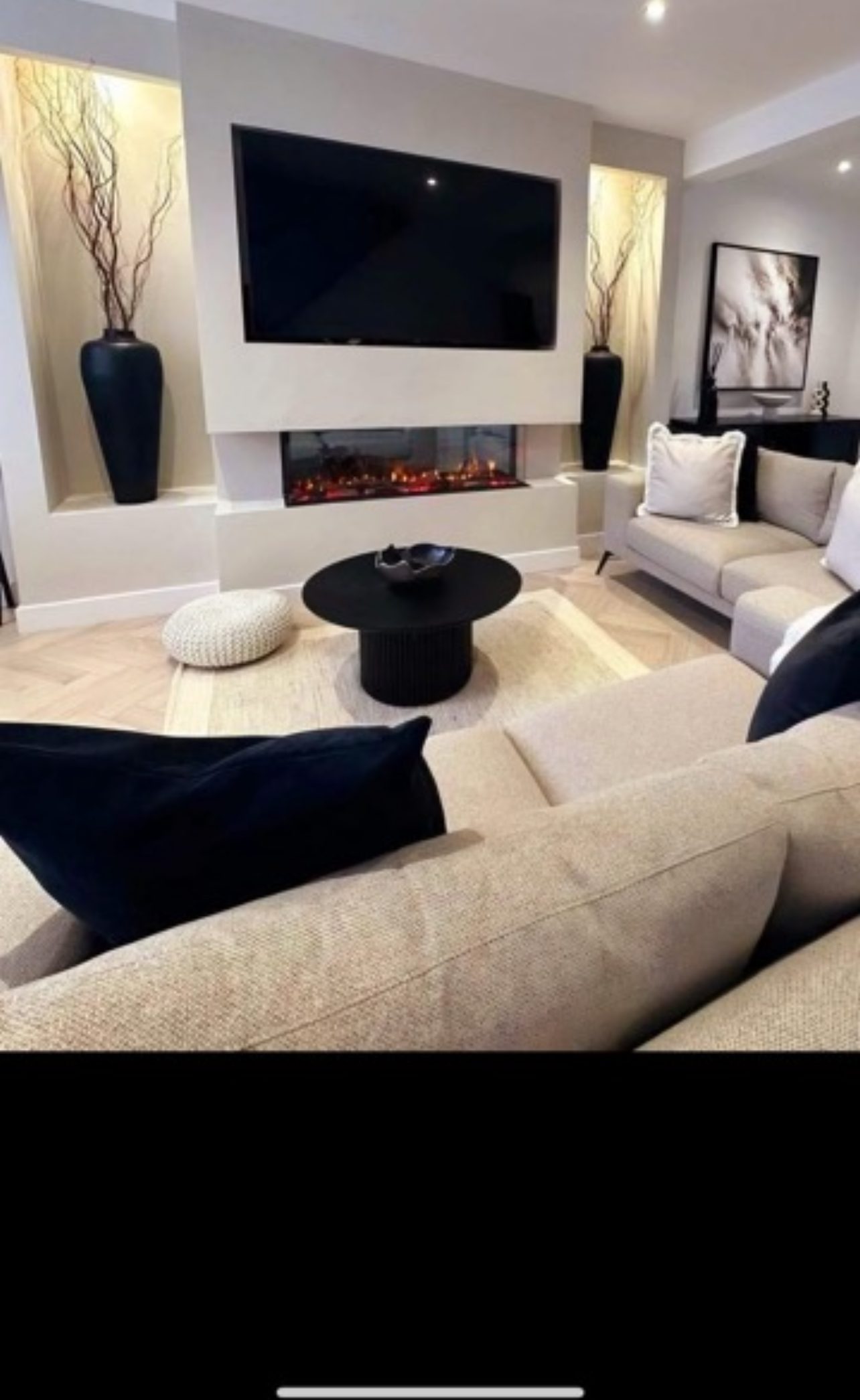
Caseta is consumer-tier — up to about 75 devices, DIY-friendly, limited keypads. RadioRA3 is pro-tier — up to 200 devices, engraved backlit keypads, deeper integration with Savant, Josh.ai, and the rest of your AV. If you have more than a dozen zones or want engraved keypads, go RadioRA3.
Almost never. Lutron's wireless lines — Caseta, RadioRA3, and Sivoia QS Triathlon shades — are built for retrofit. Most jobs require zero drywall work. In new construction we pre-wire for the wired platforms; in finished homes we stay wireless unless a specific keypad run demands otherwise.
The Sivoia QS Triathlon and wired Sivoia QS lines are the quietest residential shades on the market — roughly the volume of a refrigerator compressor cycling on. Quieter than every off-brand roller shade we've ever inherited. Primary-bedroom blackout shades on schedules wake no one up.
Smart bulbs are fine for a room or two. For a whole house you need dimmers at the switches, not bulbs, for reliability, performance, and resale value. Guests know how to use a wall switch; they don't know how to open your app. That's the Lutron category — switch-level control that your whole family (and the next owner) can use.
Every project is quoted fixed-scope, fixed-price after we walk the home. Fixture count, shade count, keypad count, and wiring access drive the number. No commission-based upsells — if Caseta is the right answer, Caseta is what we install.
Pico keypad batteries last about 10 years. Sivoia QS Triathlon shade batteries run 3 – 5 years depending on use. For higher-use rooms we recommend hard-wired shade power where the architecture allows. Every system we deploy reports low-battery status through OVRC — we get the alert before you do.
Every Lutron project begins with a walkthrough at the time of day you actually use the space. Tell us when, and we'll meet you there.
Caseta fits homes with up to about 75 dimmers and switches and pairs well with Sonos, Alexa, and Apple Home. RadioRA 3 (RA3) is the sweet spot for most Potomac/Bethesda homes — keypads in every room, motorized shades, scenes that coordinate with AV. HomeWorks is for estates with 200+ devices, multi-building integration, and full Crestron-style automation. We install all three weekly and steer you based on house size and how integrated you want it.
Yes. RA3 and HomeWorks integrate natively with Sonos for audio-driven scenes (lights dim when music starts), Apple Home and Alexa for voice control, and most major AV systems. Caseta also works with all three via the Caseta Smart Bridge. The integrations are reliable — Lutron is the gold standard for residential automation.
Usually new shades. Lutron's Sivoia QS and Serena shades have purpose-built motors and battery housings; retrofitting a non-Lutron shade typically costs more than buying new and underperforms. We measure, order custom fabric and sizing, and install. Lead time is typically 3 to 6 weeks from order to install.
A whole-home RA3 install — keypads in 8 to 12 rooms, motorized shades, scene programming, integration with your AV — runs 2 to 5 days of on-site work plus 1 to 2 days of scene programming and tuning. Caseta-only installs are usually a single day.
Yes. Lutron's local control means lights, shades, and scenes run from the in-home processor. Internet is only required for remote app control and integration with cloud services. The system itself stays fully functional during outages.